How-to guides
OctaFX (Elev8) Copy Trading: Real or Fake? How It Works
The straight answer on whether OctaFX's copy trading is legit, plus how Copier and Master roles work, what it costs, and the honest risks.

 Reviewed by TalhaUpdated 2026-07-07
Yes — OctaFX (Elev8) copy trading is a real, legitimate feature, not a scam gimmick. The broker built the platform itself rather than bolting on a third-party service, and it works through two clear roles: Copiers, who automatically mirror someone else's trades, and Master Traders, who get copied and earn a commission. But "real" is not the same as "safe" or "guaranteed profit." Below is exactly how it works, who pays what, what protects you — and the honest caveats before you copy anyone.
Contents
Want to see the copy trading platform yourself?
The clearest way to judge copy trading is to open a free account, download the copy app, and browse the Master Traders' real stats before you invest a cent. Sign-up takes about 3 minutes.

📢 OctaFX is now Elev8 — same broker, same account. You’ll see the Elev8 name and logo after you click.
Open OctaFX (Elev8) account →Trading forex/CFDs carries significant risk. This is general information, not financial advice.
Is OctaFX copy trading real or fake?
The short answer: it's real. Copy trading is a genuine feature the broker built and runs itself — in its own words, it "provides traders with a copy trading platform developed by the broker, not by a 3rd party or software provider." It's branded Octa Copytrading (or "Octa Copy"), and under the February 2026 rebrand to Elev8 it's called Elev8 Copy. There are dedicated mobile apps for it — one for Copiers and one for Master Traders.
So why do people search "real or fake"? Two reasons. First, copy trading as a category attracts a lot of over-hyped "passive income" marketing, so healthy skepticism is normal. Second, OctaFX/Elev8 is itself an offshore-regulated broker and carries the review complaints typical of a high-leverage broker (we cover both below). The feature being real doesn't make it risk-free — those are two different questions, and this guide answers both honestly.
How it works: Copier vs Master Trader
Copy trading here is built around two roles, and knowing which one you are is the whole game:
- Copier — you fund a separate Wallet and choose a Master Trader to follow. Your account then automatically copies that trader's positions in proportion to what you invested. You don't place the trades yourself; you mirror theirs.
- Master Trader — you let other people copy your orders and earn a commission when they do. Per the broker, "any trader with an MT4 account can become a Master Trader."
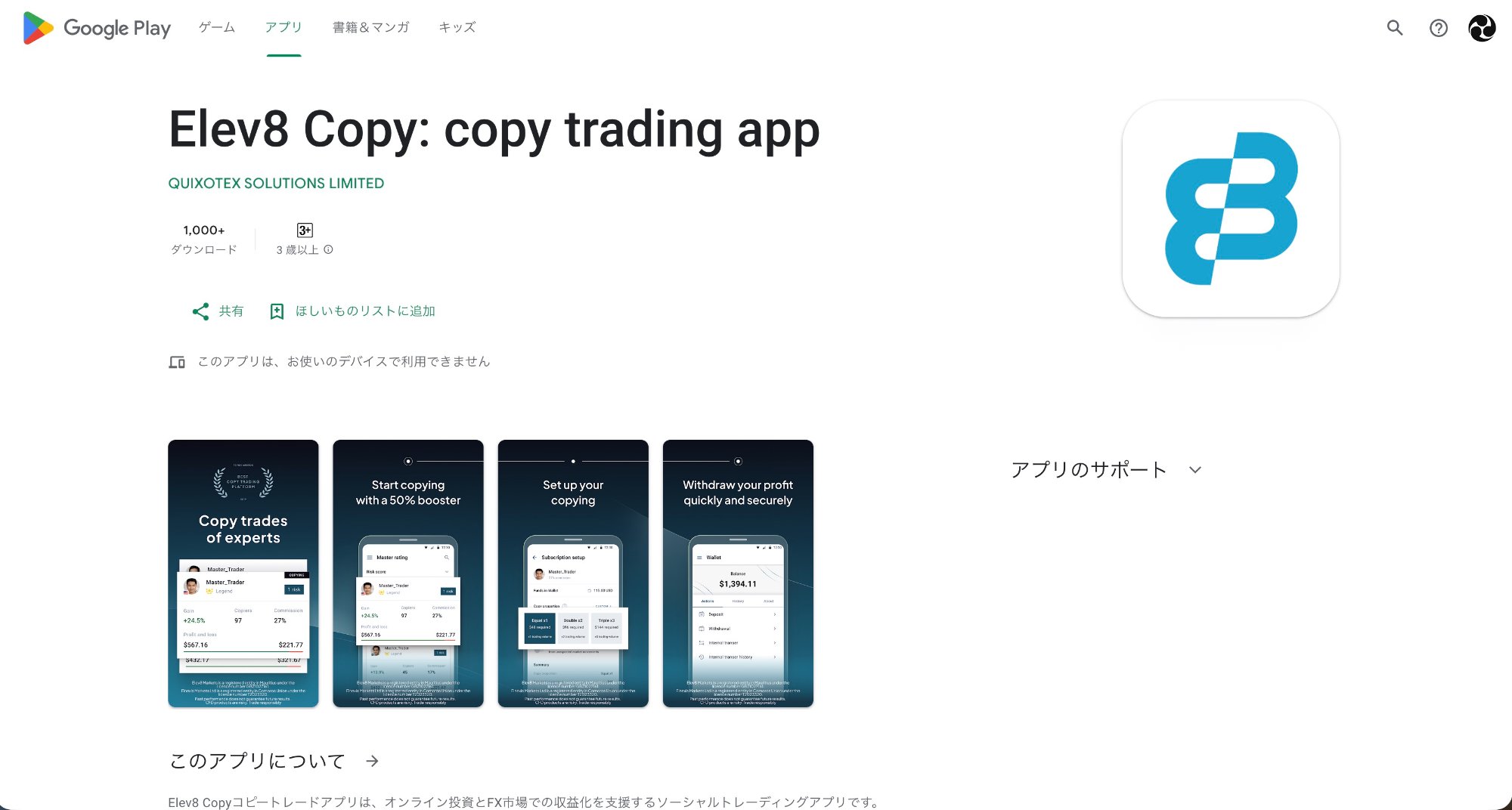
Before you commit money, the platform lets Copiers browse Master Traders by their published stats — risk score, gain, profit/loss, number of copiers, commission and order history. That's the raw material for deciding who (if anyone) to follow. The copying itself runs through the dedicated app rather than the standard trading terminal.
Who pays what — the commission model
This is where most people get confused, so here's the money flow in plain terms. As a Copier you should understand three layers of cost:
| Charge | Who pays | Detail |
|---|---|---|
| Master Trader's commission | Copier → Master | "Predetermined and specified individually" per Master — each Master's profile shows the size. A third-party review puts the typical range at 0–50%; treat that as approximate and always read the specific Master's figure. |
| Broker's cut | Master → broker | The broker states: "We charge 12% of the commission you earn from all Copiers." |
| Spread markup | Copier (inside the spread) | A 0.2-pip spread-markup service fee applies on copy trades. |
On timing, the broker's own wording is specific: commission is charged from Copiers weekly, on Saturdays — and also whenever a Copier reduces their investment or unsubscribes. It is then credited to Master Traders' Wallet once a week, every Sunday after 6 p.m. So a Master isn't paid instantly per trade; it's a weekly settlement. For a Copier, the practical takeaway is that the headline "gain" you see on a Master's profile is before their commission comes out of your side.
What protects you — and what doesn't
Two mechanics work in a Copier's favour, and they're worth knowing before you fund a Wallet:
- Negative-balance protection. The broker states its "risk management system ensures that clients cannot lose more than they initially invested. If your balance becomes negative due to Stop Out, we will compensate the difference and bring your account balance back to zero." In plain terms: you can't drop below zero and end up owing money.
- Unsubscribing returns your funds. Per the broker, "when you unsubscribe, all funds invested with the Master Trader and your profit from copying will be returned to your Wallet." There's an important catch, though: you won't get your original investment back in full if you end the subscription while it's at a loss — you exit at whatever the position is worth, losses included.
The broker also lets you apply its 50% deposit bonus to a Copier's investment. As with all its bonuses, that bonus only becomes withdrawable after completing a trading-volume requirement, so read the bonus terms before you count on it.
What copy trading does not protect you from:
- Losses from the trader you copied. Negative-balance protection stops you owing money; it does not stop the copied trades from losing the capital you put in.
- Past performance. A Master's gain and risk score are history — they don't predict future results, however good they look.
- Slippage and latency. Copies execute in real time, so the price you get can differ slightly from the Master's.
- Offshore regulation. Elev8 operates under offshore authorities — the FSC in Mauritius and MISA in the Comoros — not a tier-1 regulator; the former CySEC (EU) entity was not carried into the Elev8 brand. That means weaker oversight than an FCA- or ASIC-supervised broker.
How to start copying (and the minimum question)
The flow is straightforward once your account is verified:
- Open and verify an account. Sign up, confirm your email and complete KYC (ID + proof of address).
- Get the copy trading app. Copying runs through the dedicated Copier app ("Elev8 Copy") rather than the standard terminal.
- Fund your Wallet. This is the pot your copies are sized against.
- Browse Master Traders by risk score, gain, profit/loss, number of copiers and commission — and check the order history, not just the headline gain.
- Subscribe to a Master and set how much you're investing. Your account then mirrors their trades automatically until you unsubscribe.
What about the minimum to start copying? The broker does not publish a single fixed figure on its copier page — the minimum is low, but it depends on the Master and your region, so check the current terms in your account. (One third-party guide cites around $25, but we won't present that as an official number.) You can review the mechanics and each Master's stats on the broker's copy trading page before committing anything, and it's sensible to start small while you see how a Master actually performs live.
So, real or fake? The bottom line
Real. OctaFX (Elev8) copy trading is a legitimate, broker-built feature with a clear structure: Copiers mirror Master Traders, Masters earn a per-Copier commission, the broker takes 12% plus a small 0.2-pip spread markup, and negative-balance protection means you can't lose more than you put in.
But "real feature" is not "guaranteed money." You're handing trading decisions to someone whose past record doesn't guarantee their future, on an offshore-regulated broker (Mauritius FSC + Comoros MISA, not tier-1) where the recurring review complaint is around large withdrawals and extra verification — even though small withdrawals are widely reported as fast. None of that makes copy trading a scam; it makes it a tool with real risk. Copy only money you can afford to lose, start small, and treat a Master's numbers as a starting point for research, not a promise.
The broker in this guide
Commission-free trading, copy trading, MT4/MT5 and OctaTrader. Minimum deposit from $25 (varies by method). Offshore-regulated (Mwali/Comoros) — read our full review before you decide.
Open OctaFX (Elev8) account →FAQ
Is OctaFX (Elev8) copy trading real or a scam?
It's a real, broker-built feature — "Octa Copytrading," now "Elev8 Copy" — with its own mobile apps, not a third-party plug-in or a scam gimmick. That said, a genuine feature is not a guarantee of profit: you can still lose the money you invest, and OctaFX/Elev8 is offshore-regulated rather than tier-1.
How much does OctaFX copy trading cost?
As a Copier you pay the Master Trader's commission, which is set individually per Master and shown on their profile (a third-party review cites a 0–50% range). On top of that the broker takes 12% of the Master's commission and applies a 0.2-pip spread markup on copy trades. Commission is charged from Copiers weekly, on Saturdays.
What is the minimum to start copy trading on OctaFX?
The broker doesn't publish a single fixed minimum on its copier page; it's low, but it depends on the Master and your region, so check the current terms in your account. A third-party guide cites around $25, but that is not an official figure.
Can I lose money copy trading?
Yes. Negative-balance protection means you can't lose more than you invested or go below zero, but you can absolutely lose the capital you put in if the Master's trades lose. Past performance and a Master's risk score don't predict future results.
What's the difference between a Copier and a Master Trader?
A Copier funds a Wallet and automatically mirrors a chosen Master's trades. A Master Trader lets others copy their orders and earns a commission — and any trader with an MT4 account can become one.
Ready to explore copy trading?
Open a free OctaFX (Elev8) account, fund a Wallet, and pick a Master by their published risk score and history — starting with only money you can afford to lose.
📢 OctaFX is now Elev8 — same broker, same account. You’ll see the Elev8 name and logo after you click.
Open OctaFX (Elev8) account →Trading forex/CFDs carries significant risk. This is general information, not financial advice.